
Willemijn Zwiep, Head of Brand, Marketing & Communications
'In ten years’ time more than 250,000 children have received a money diploma. That is an amazing result.'
From 22 to 26 March, Wijzer in Geldzaken, part of the Ministry of Finance, is organising the annual Dutch National Money Week. This initiative is aimed at preparing children in primary school for financial self-reliance. One of the partners of the project week is Deloitte. Deloitte’s Willemijn Zwiep, Head of Brand, Marketing & Communications, came up with the idea ten years ago. What impact has The National Money Exam made so far? And what does she remember most? Here are ten Q&As.

’I had just started working at Deloitte and I was exploring the financial world in every possible way. One of the things I came across in the media were stories about young people with financial difficulties. One day my daughter, who was in 5th grade at the time, proudly came home with her traffic diploma. This is quite silly actually, I thought. Why do we offer traffic lessons to all Dutch children, but no money lessons? A money diploma is just as important. And so the idea came up for a money lesson program, and for The National Money Exam for 5th and 6th graders.'
’Deloitte immediately considered it a good idea. It matches with who we are as an organisation. If we can advise other companies in-depth about their financial position, then we must be able to explain this to children as well. The project was fully supported and later also embraced by the Deloitte Impact Foundation. I was allowed to find out how we could set up the money lesson program and to involve a colleague. It was quite an extensive project, with various partners such as Nibud and publishers in primary education. As Deloitte, we may be financially savvy, but developing teaching programs is a completely different skill.’
’Our mission is to teach children how to handle their finances. Money plays such an important role in everyone's life. If you learn how to deal with money at a young age, it will be so much easier when you’re older. That is why we have chosen to develop a program for primary school. When children go to high school, their world suddenly becomes so much bigger, with plenty of financial decisions to make. We want children to be prepared beforehand.’
’In terms of financial education, there were already a number of initiatives, but they were scattered. A lesson here and a video or play there. So we opted for a curriculum consisting of a number of lessons and a final exam. That way the program would truly make a lasting impact.’
‘Very well. During the Dutch National Money Week we usually offer guest lessons at primary schools. These lessons require so-called money coaches from Deloitte. It has never been a problem to find enough enthusiastic people. In fact, it gets sold out very quickly! Colleagues really enjoy doing this. The children asking questions, the dynamics of a primary school, that really boosts your energy. ‘
’Ten years ago, we started ”selling” the free curriculum at the NOT, which is an educational fair. Now, we are collaborating with Uitgeverij Zwijsen, an educational publisher, who have included The National Money Exam in their portfolio. The curriculum and the exam have been greatly improved, thanks to many teachers and pupils. And over the years, the curriculum has become much more attractive. The program is more interactive, a workbook has been included, as well as fun videos. It is important to keep up with trends and developments. For example, the exam now also contains questions about paid apps.’
’At the start, about 100 classes purchased a teaching package. That number has already increased to about 1,000 per year. This means that we are able to reach about 30,000 children every year. In ten years’ time more than 250,000 children have received a money diploma. That is an amazing result.’
’It really boosts my energy and is very satisfactory. It is great to see the program expand and to notice that it is really making an impact. I think one of the best moments of each year is the ”Big money lesson” that we organise at our office during the Dutch National Money Week. Three to four primary school classes are invited, with a hundred children suddenly running all over the building. They are addressed by Deloitte's ”money boss”, aka our CFO, and they ask brilliant questions such as ”Are you rich?” and “What type of car do you drive?” The children really enjoy being in the office and participating in the money lesson.’
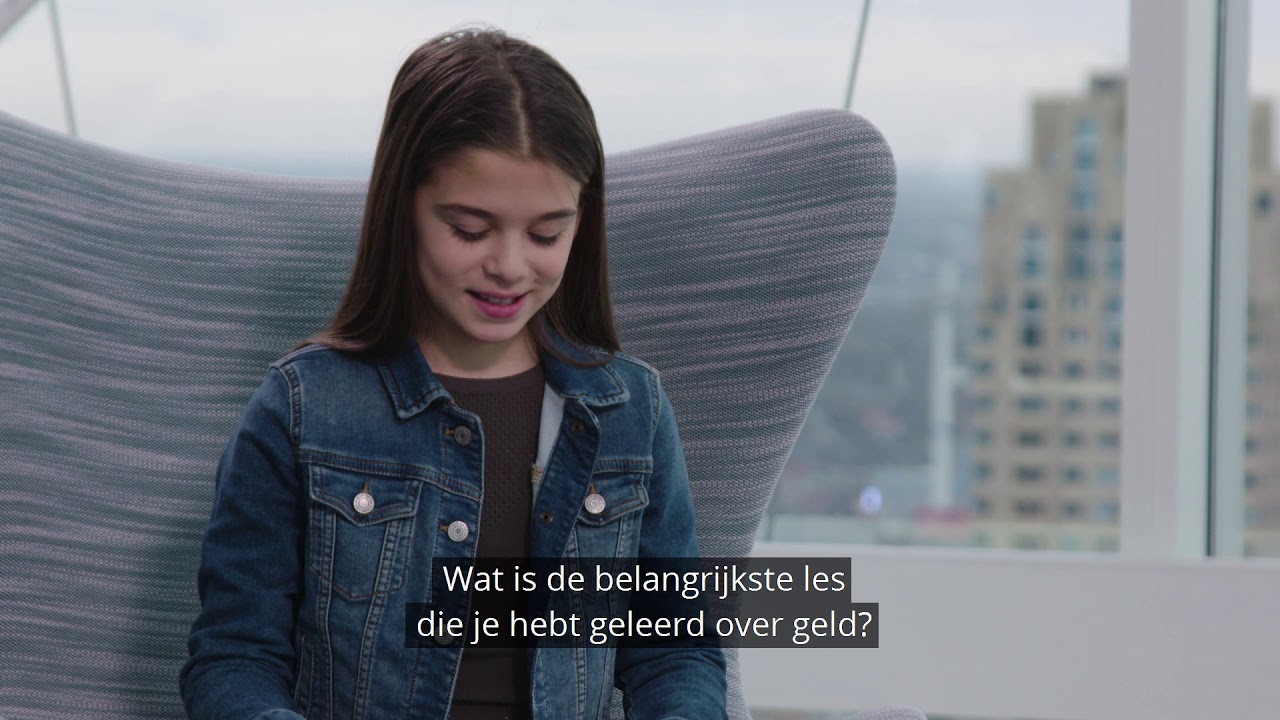
’There are many special moments that I remember with joy. The first money diplomas were awarded by Máxima, who was still a princess at the time. Of course, that was a grand happening. Mayor Aboutaleb of Rotterdam attended the ”Big money lesson” at our office. But we also organised a competition for the pupil with the best answer to the question ”If you were a Rotterdam mini-minister of Finance, how would you spend your money? “. The winner was Haci Nuh. Later on that year, he helped minister of Finance Jeroen Dijsselbloem carry the briefcase with the ”Miljoenennota” during Prinsjesdag. Isn't that amazing?’
’I hope we can continue to make the same impact. Reaching 30,000 students every year is a big deal. But I would also like to develop a program for high school students. And perhaps an international version? Financial problems do not stop at national borders and it is such a great win if you can prevent young people from ending up in debt. In the future, I would really like to see financial education being included in the standard school curriculum, next to language and math. Money lessons make so much sense.’
You will share your talent with the 1000 colleagues of Deloitte The Netherlands various Support departments. Within our teams, co-operation and personal development are key. View all Support vacancies and connect your future to Deloitte.