Making every life count: benefit management with a purpose; Deloitte and Stichting 113 join forces to take the next step in suicide prevention

It may sound like an unlikely combination: a consultancy firm that is used to thinking in terms of data and results, and a foundation that fights every day to save lives. But it was precisely in this contrast that an energetic, mutually enriching collaboration was born. Through the Deloitte Impact Foundation, Deloitte colleagues joined forces with Stichting 113, the national expert in suicide prevention. And with tangible results.
"The foundation was passionate but unsure if projects achieved desired results."
Kim aan de Meulen | Senior Manager, Audit Advisory
Benefit management with a human face
During the first phase, the Deloitte consultants helped 113 employees clearly define the intended outcomes of each new initiative in advance — and how to link KPIs to them. It was also discussed that not every project is equally suitable for KPIs, but that linking them is particularly valuable for initiatives with a clear impact. The foundation carried out projects with great passion and dedication, but they were not always sure whether these projects were achieving the desired results. 'The hardest part was the beginning', Kim recalls. “Some employees said, ‘If I help just one person, it’s worth everything’ — and of course, they’re absolutely right. Our task was to find a way to make these valuable activities measurable. How can you focus more on the outcomes of an action?'
The outcome was not a cold spreadsheet but a practical tool that captures both quantitative and qualitative benefits. Rick explains: 'We didn’t make everything 100% measurable — that’s simply not possible — but we did help 113 make more conscious choices and report more effectively, for instance to funders and regulators.'
.jpg)
From ‘showing how’ to ‘doing it themselves’
After completing the first phase, 113 became a true advocate of the benefits methodology and asked for a follow-up: could Deloitte help them learn how to use the method with partners in the field? 'We chose a train-the-trainer approach: first demonstrate, then do it together, and finally enable them to do it independently', Kim explains. 'Together with 113, we supervised two pilots — a collective of walk-in centres and six municipal networks — and then we handed over the baton.' This scaling-up turned out to be a great success. In total, eleven organisations were supported in formulating benefits and KPIs, and 113 now has an internal team capable of independently guiding new partners. 'At the end of the process, I heard someone from 113 explaining the methodology as if they had been using it for years', Rick says proudly. 'That was the ultimate proof that our work had been successful.' The scaling-up even took on a political dimension. 'During the parliamentary debate on the new Suicide Prevention Act, our benefit management approach was explicitly mentioned. The fact that the method contributed to legislation requiring municipalities to invest in suicide prevention is truly fantastic.'
"Hearing 113 explain the methodology like experts was proof of our success."
Rick Simonse | Senior Consultant, Technology & Transformation
Learning across boundaries
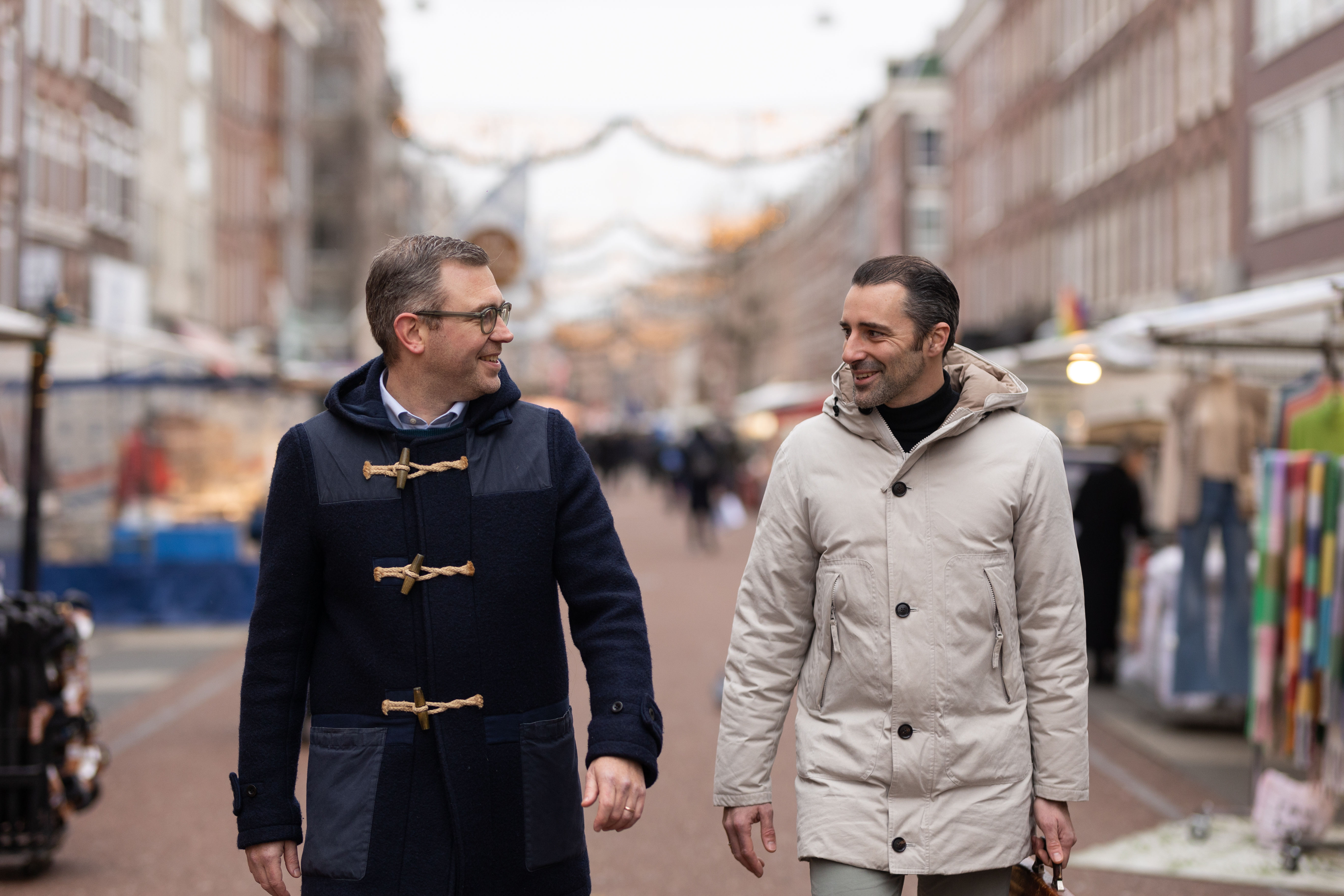
The partnership not only offered value for 113. For Deloitte, it was an opportunity to step outside the (corporate) comfort zone. 'It was out-of-the-box — we had to completely adapt our methodology to a non-profit organisation with a sensitive, personal mission', Rick shares. 'And it taught us how powerful it is when different Deloitte experts work together.' Kim developed new skills: 'Benefit management isn’t normally part of my audit work. I really had to learn it, and that experience is incredibly valuable. The drive that 113 employees have is inspiring. Their passion is radiant and contagious. The great thing is that 113 creates a culture in which there is also room for humour. It allowed us to address heavy topics with some lightness.' The Deloitte colleagues did not join this project by chance. Both have, unfortunately, been personally affected by suicide. 'That makes the topic heavy, but also deeply meaningful', says Rick. 'This project became an opportunity to break the taboo. Within Deloitte, it acted as a conversation starter. Colleagues would ask: what exactly does 113 do? In this way, we’ve also managed to increase internal awareness around mental health. But as far as I’m concerned, this is not enough. The topic is so important that we need to keep talking about it together.'
Publication date 9/12/2025
‘A joint effort to make the Netherlands debt-free’